breelandwalker:

crosses-and-broomsticks:

YO OKAY SO LISTEN

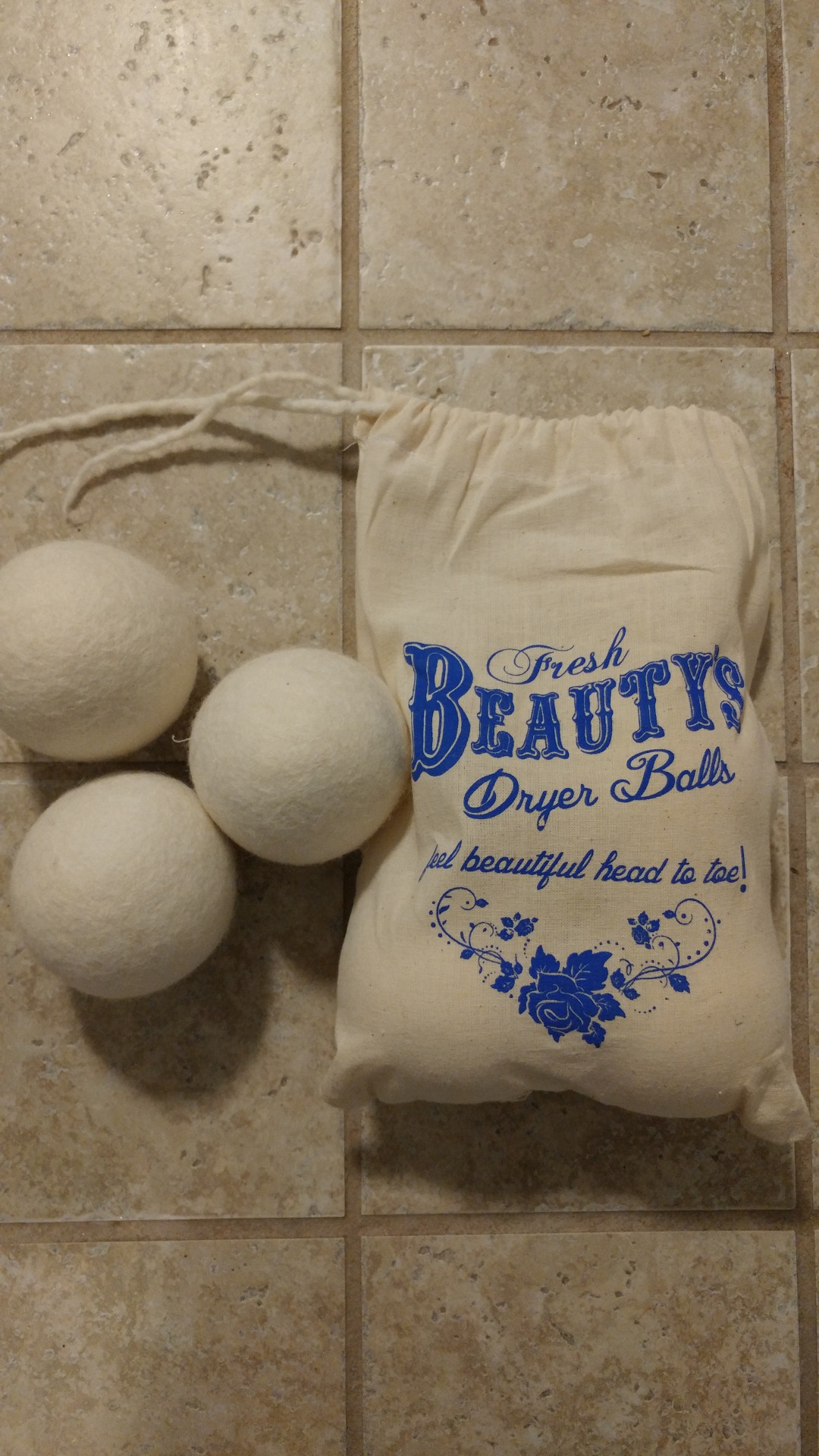
one of my nurses got me these for Christmas!! They’re dryer balls, and apparently you add 2-3 drops of essential oils to it, it soaks in, and you throw 3 of them in when you dry the clothes and then they smell like the oils! They’re reusable for like 3 loads! This is SCREAMING witchcraft, adaptable or otherwise.

I adapted Bree’s Anti-Harrassment spell into a liquid form and then poured it on a few of the balls tonight. I just figured other people could benefit from this idea too!

How utterly fantastic! What a great idea! 🙂

kindnessandgoodvibrations:

kindnessandgoodvibrations:

ghostoftwentysomethingspresent:

madsciences:

awfullydull:

markrial:

tramampoline:

slow-riot:

Weirdly anti-millennial articles have scraped the bottom of the barrel so hard that they are now two feet down into the topsoil

its so wild like “this generation with no fucking money is learning to prioritize essentials” and all these chucklefucks can write is advertisements for these companies

at least our jeans won’t tear at the seams after two washes

FUCK FABRIC SOFTENER IT’S UTTERLY POINTLESS

AND FUCK DRYER SHEETS LITERALLY NOBODY EVER HAS ENOUGH OF A PROBLEM WITH STATIC TO WARRANT PAYING OUT THE ASS FOR THAT SHIT

DO YOU WANT CLEAN CLOTHES? YOU DON’T EVEN NEED TO BUY FUCKING DETERGENT JUST MAKE YOUR OWN* IT’S SO GODDAMN EASY AND 80X CHEAPER

FUCK THE ENTIRE LAUNDRY INDUSTRY

*Fuck The Entire Laundry Industry Recipe

1 cup Washing Soda (not Baking Soda. Different things.)

1 cup Borax (not Boric Acid. Also a different thing.)

½ cup – 1 cup grated bar soap (you can use literally anything. I often use Ivory because it’s easy to get and I find it works well, a lot of people like Fels-Naptha, which is an actual laundry bar. Some people use Dr. Bronner’s. Really does not fucking matter.)

After grating your soap, combine all ingredients. That’s it. That’s the whole thing. Use maybe a ¼ cup per load.

^^^ I’ve done this for years now and it works as well as any store bought detergent

WHAT
Thank you, tumblr user awfullydull! Your URL does no justice to the good advice you give!

Also you can MAKE your own washing soda very VERY cheaply.

Step one: acquire $5 bag of baking soda from Costco.

Step two: lay that motherfucking baking soda out on a baking tray.

Step three: bake the baking soda on a tray in an oven at 400° for 1 hour (to make the moisture evaporate, leaving washing soda)

Step four: revel in how easy and cheap it is to make your own washing soda, and maybe take a moment to be angry that the industry upcharges the fuck out of something that is so easy to make.

I see some of y’all complaining about static and/or wanting nice smelling laundry. Go to a craft store, find 100% wool yarn balls. If it doesn’t come in a ball, ask an employee to make it into a tight ball for you. Wash in the washing machine to make it felted. Remove from washer, add a few drops of essential oil to the ball, allow to seep in. Dry with clothing. Doesn’t need to be rewashed ever, and if it stops smelling, add few more drops of essential oil. Bam, reusable dryer sheets.

Irregular Witchy Reminder

breelandwalker:

spiral-path:

idontusemycauldrons:

idontusemycauldrons:

Done any jar spells with fresh ingredients in the past several weeks? 

Please check on them now for mold. Cancel out the spell, cleanse the jar, whatever – promise me you’ll throw out the contents.

If you meant for them to mold, then just don’t keep them indoors. That’s just gross and unsanitary.

I took my own advice too late last week.

Goodbye, herbs from 2014!

WITCH TIP: 

A small chunk of charcoal (for those that don’t know what charcoal is- its the burned out chalky chunks of burned wood from a woodfire) will absorb moisture and prevent mold!! It doesn’t have to effect your spell in anyway. 

If your jar contains liquid, put a tsp of vodka for the same purpose. 

THIS. This is so important. And no, do NOT try to salvage the ingredients, honey, just CHUCK them. And make sure you wash out that jar with some scalding hot water and antibacterial soap if you’re going to try and reuse it. (Which I don’t recommend.)

Also, double-check your jars of stored herbs from time to time. If anything is turning fuzzy, throw out EVERYTHING in the jar, and start over. If you’re drying herbs yourself, don’t put them in the jar until they’re crunchy all the way to the tip of every leaf. Even the smallest amount of moisture can produce mold and BOOM. You’re out an entire jar of herbs.

Also, keep your drying herbs and stored jars out of direct sunlight. That’ll reduce the problems with bleaching and mold growth by a fair amount.

If you’re cold but broke:

blacktailcat:

hedgewitchwanderings:

ithotyouknew2:

So, my heat in my apartment is temperamental and I’ve lived in apartments with no heat at all so, space heaters are like my best friend. Anyway, REALLY good ones are usually pretty expensive BUT, I bought this lil baby the other day and it keeps my 10×16 room TOASTY. It’s 6 degrees outside and about 60 in the rest of my apartment but I’m super warm with this thing on high. Anyway, if you’re broke but needing heat so you can actually function in your home, buy this heater! It’s only $16! 

Link

Reblog to quite literally save a life! ‘Cause it gets fuckin’ cold out there.

Excellent advice. 🙂

An extremely similar model is currently on sale at ALDI for $10! So if you have a local ALDI, check there this week before buying this one. :3

pacificnorthwestdoodles:

oursustainableworld:

artamanen:

“How to Build a Straw Bale Garden“ by Nicole Jolly

(via Modern Farmer)

Faced with the expense of building raised beds, I
decided instead to go cheap and easy: a straw bale garden. So I called
up Joel Karsten, author of Straw Bale Gardens, and lead authority on all things straw.
Karsten argues that straw is an ideal “container” for growing
vegetables. “The hollow tubes are designed by Mother Nature to suck up
and hold moisture,” he told me. And as the insides of the bales
decompose, they provide a rich medium for vegetable growth.
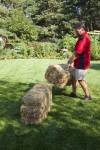
You can put together a straw bale garden right on your lawn, your
driveway (oh yes, your neighbors will love you) or anywhere that gets at
least six to eight hours of sun. It’s especially good for growers who
live in northern climes with shorter growing seasons — the bales heat up
much quicker than soil, stimulating early-season root growth.

1. Source your straw
You can toss the dice like I did and purchase straw bales from your
local garden center, but it’s best to source them direct from the farm.
If you want to garden organically, the person at the garden center won’t
likely know how the straw was grown. To help connect farmers with
growers, Karsten has set up a user-generated marketplace,
but it’s still too small to be useful to most gardeners. Remember,
straw is easiest to come by in the fall. If you arrange your straw bale
garden before the winter, you’ll be all set to plant when springtime
comes.

2. Position your bales
Before you set up your bales, lay down landscape fabric to prevent
weeds from growing up through the bales. Arrange the bales side by side
in rows, with their cut sides up. The strings that bind the bales should
run across the sides, not across the planting surface. The strings will
help keep the shape of the bales as they start to soften and decompose.

3. Condition the bales
Two weeks before you plant, you have to get the bales cooking. This
means wetting and fertilizing the bales for roughly 10 days to start
composting the inner straw. For the first six days, put down 3 cups of
organic fertilizer per bale every other day, and water the bales to push
the fertilizer down and thoroughly saturate the straw. On the off days,
simply water the bales. (Tip: try to ignore the neighbors staring
suspiciously from their windows.) Days 7 through 9, lay down 1.5 cups of
organic fertilizer each day and water. Day 10 put down 3 cups with
phosphorus and potassium (bone or fish meal mixed with 50% wood ash
works like a charm).
If you stick your finger into your bales, they’ll be hot and moist.
You’ll start to see some “peppering” — black soil-like clumps that
signal the beginning of the composting that will continue through the
growing season. If mushrooms sprout up, rejoice — they won’t harm your
plants; it means the straw is decomposing as it should.

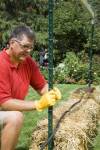
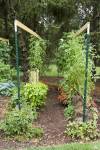
4. Build a trellis and greenhouse in one
One of the coolest things about straw bale gardening is that it
combines the best of container gardening with vertical gardening.
Karsten recommends erecting seven-foot-tall posts at the end of each row
of bales, and running wire between them at intervals of 10 inches from
the tops of the bales. As your seeds sprout, you can use the bottom wire
to drape a plastic tarp to create an instant greenhouse for those
chilly early-season nights. And as the plants begin to grow, the wire
works like a vertical trellis, supporting your cucumbers, squash and
assorted viney vegetables.

5. Time to plant
If you’re planting seedlings, use your trowel to separate the straw
in the shape of a hole and add some sterile planting mix to help cover
the exposed roots. If you’re planting seeds, then cover the bales with a
one to two-inch layer of planting mix and sew into this seedbed. As the
seeds germinate, they’ll grow roots down into the bale itself. While
you’re at it, plant some annual flowers into the sides of the bales, or
some herbs — it’s otherwise underutilized growing space, and will make
the garden a whole lot lovelier.

6. Look, ma — no weeding
If you lay a soaker hose over your bales, you’ve pretty much
eliminated all your work until harvest. That’s because your “soil”
doesn’t contain weed seeds. There’s one caveat, though — if you didn’t
get your straw from a farmer (guilty as charged), there’s a chance your
straw (or, worse, hay that was sold as straw) contains its own seed. If
your bales start to sprout what looks like grass, you can beat back the
Chia pet effect by washing the sprouts with diluted vinegar. If you
don’t mind the look though, the grass shouldn’t harm your plants, and
will likely die off from the heat produced by the bale’s decomposition.

7. The harvest after the harvest
When the harvest season ends, the bales will be soft, saggy and gray —
but that’s exactly what you want. Because when you pile the straw
together and leave it to compost over winter, you’ll have a mound of
beautiful compost to fill all your pots and planters in the spring.

Have never done this, but I am super interested! Pretty amazing.

I’ve done this in my class because our ‘garden area’ was all gravel. Works pretty well!

trembletongue:

I didn’t realize how misinformed I was about skincare until I started practicing a little witchcraft. I thought that apricot scrubs were good, oil was bad, and that cystic acne couldn’t be treated topically. Oh, was I wrong. About a year ago, I befriended a 30 year practicing witch who had about 14 years cosmetology experience at the time. Having just discovered Paganism myself, I constantly bugged her about both subjects. She taught me some basics and I’ve been using them ever since. They really work. And it’s a nice and easy introduction to spells if you’re looking to get into somethin’ spooky. 

First things first: Apricot scrubs are TERRIBLE. Any facial scrub that has granules you can see is going to put tiny cuts in your already irritated face and make your acne more susceptible to infection/irritation. She recommended using a mixture of coconut oil and baking soda to make a paste that will very very gently remove dead skin without causing redness. People with rosacea should avoid using any type of scrub, even though this one is very mild. Never exfoliate more than 2-3 times a week, and never ever do it two days in a row. When you’re done, make sure you put as much oil as you can in the trash can- rinsing it off in the sink will clog the drain over time. And remember- the thicker the paste, the more coarse the scrub will be. Scrub using gentle yet wide circular motions, timing yourself at about 60 seconds. 

Oil is not bad for your skin! Coconut oil has tiny molecules unlike other oils, so it can penetrate hair and skin better than other oils. Coconut oil is excellent at pulling your natural facial oils out of your pores without stripping moisture. After you use the scrub, use a warm, damp wash cloth to gently wipe away the oil and baking soda. You should always moisturize immediately after cleansing, but I’ve noticed that after using this cleanser my skin doesn’t ususally need it. Besides coconut oil, lavender oil, grapeseed oil, and sweet almond oil are also very good for acne prone skin. Tea tree oil can be diluted heavily and applied to spot treat, but do not use more than once a week in small quantities or it will make your skin itchy and red. Always always always moisturize before putting on makeup by the way!

As for the face masks! I have a face mask recipe that will reduce my pore size by like 80-90%. Seriously. If I used it once a week I’d have perfect skin, but I don’t, so even when my skin is at its worst, this mask still kicks ass. I don’t have exact measurements for everything (or anything really) so please be patient with yourself when making them. But that’s the beauty of this recipe- you can change it to fit your skin problems with a little research and a trip to the health food store. Side note: Do the mask right after you use the scrub. Otherwise it won’t work as well.

The base of the mask is this magical powder called kaolin clay. I buy it in bulk at the health food store and it’s cheap as hell. It’s just a mild clay that turns to putty then hardens in ten minutes. I probably use ¾ cup, maybe even a full cup for a mask. Just depends on how many liquids you want to include. Star out small and add as you go.

After putting a starter amount of clay into a small bowl, I set that aside and start on the liquids. I like to use tea instead of water. I make a teensy amount of hot water then pour it over green tea, rose petals, and calendula petals. Green tea is anti-inflammatory, rose balances pH, and calendula is great for skin. Try to buy organic so you’re not dousing yourself in pesticides. I set these aside to brew. The less water you use, the stronger the tincture, and the less time you need to wait. 

I only have a few essential oils, but if you do a little research, it is super easy to pick out some that are good for skin and are non-comodegenetic (won’t clog pores). I take my little bowl of clay and start adding a few drops of lavender oil, a few drops of grapeseed oil, a squirt of sweet almond, and two tiny drops of tea tree. Other options are ylang ylang (good for oily skin), chamomile (very soothing), and clary sage (for reverse aging and puffiness). I would say maybe 5 oils would be a good maximum, just because you need room for the tea. 

Add the tea by holding the flowers back with a spoon and pouring tiny little amounts into the clay and oil mixture, stirring frequently so that you don’t get it too thin. You want it the texture of Elmer’s glue. If a few petals get into the mask, that’s fine. Some people add loose green tea leaves to their masks straight up, so whatever’s clever. Then just smear the mask on, avoiding the eye area if you used tea tree oil, and leave it on for about 10 minutes. It will harden so if you want to drink anything you should use a straw, and the mask will flake a bit towards the end, so be aware of that. Once the ten minutes is up, just splash wet water on your face to turn it back to glue texture, then wash off with warm water. This may take a while. Then after you dry your face with a clean towel, check out your pores in the mirror! This is my favorite part because there are patches of my skin when I don’t have visible pores at all, and where I do, they are so much lighter and smaller. The essential oils must penetrate the blackheads or something, I have no idea, but it does what no Biore strips or Clean and Clear scrub have ever done before. 

Make sure you moisturize after ! I have really bad acne so I follow up with benzoyl peroxide (doctor’s orders) and a light drugstore moisturizer to keep my pores looking like this as long as possible. I recommend doing this mask once a week at least, but definitely no more that once every three days. And don’t pop pimples! Give these remedies some time and you will see a huge difference. 

One more thing: Rose water. I make my own, but it can be bought at $30 a bottle at Sephora. However, I don’t use mine that often because it’s non-organic, so unless you have the hookup on organic roses, you might want to steer clear. Basically all it is is rose tea. I get roses from my boyfriend frequently, so I hang them up to dry thoroughly and then collect the petals in a burlap bag. Once I have a grocery bag’s worth, I toss them in a pot to boil. There are lots of ways to do this online, but mine is very simple. Just bring petals to a soft boil, steep until it’s dark red, then let cool. I store mine in a massive mason jar in the refrigerator. I leave some petals in there to make it stronger, but you can strain them immediately if you like. Definitely strain them before using the water to make you life a little easier.

I use rose water as a toner between cleansing and moisturizing. It’s cool from refrigeration, which calms any puffiness, and it apparently balances pH. Another cool thing about it is it moistens your face right before you moisturize. Lotion doesn’t always add moisture to your skin, it often just retains what moisture you have. So if you moisturize damp skin, you’ll retain more moisture. Seems weird but it works.

The witchcraft comes in where you want it to. I like to put intention in the stirring; meaning I stir right if I want to embrace good vibes and positive outcomes, stir left if I have something negative on my mind that I want to banish. I think there is magic in the herbs and oils themselves so I don’t get too fancy or chant, but it is totally a thing for people to chant while making these kinds of elixirs. Tumblr is full of awesome little rituals! I just tend to keep it simple. 

So anyways this is basically everything I know about skincare, and it was all taught to me by a woman in her late thirties that looks like she’s 24. Kudos if you read this entire thing! Seacrest out.
littlewitchlingrowan:

themanicbibliophile:

One of my favorite “zero effort” spells is a mirror spell.

I carry a compact with me (mirrored on both sides) and whenever something happens that I need to reflect on or someone does something that I think THEY need to reflect on, I write my name (or the other persons name) on one side of scrap paper and a brief synopsis of what needs to be reflected on on the other side and I close it in the compact.
Then I just leave it closed up until I think it’s been long enough.

“Go sit in the corner and think about what you’ve done.” YES THIS IS BRILLIANT.