Many people have these wall hangings in their home as rustic decorations, but making your own can pass off as a fun craft project while secretly adding energies to the knots!
Bonus: use a wooden pole from a tree that matches your intention, and colored yarn or beads that correspond with the energies you’re putting in!
There’s tons of tutorials on youtube and online, so go wild!
Tattoo artist: Do you take some kind of pain suppressant before coming in?
Me: No. Why?
TA: Because this piece has taken a total of nearly nine hours and you never move.
Me: (That’s cause: Magick, my friend.)
Skin be steel flesh be stone Nerves be strong, as gem or bone Let pain be but kisses, or breaths of air Magic be my armour, for i will not bear Neither the sufferings of the dead or the agonies of hell Runes of blood, now serve me well
Why do my interests in canning, couponing, and homesteading overlap so often with blogs with titles like ‘The Obedient Housewife’?
Like, I’m like, “I want to learn to make soap and farm,” and suddenly I see 500 “traditional family” motherfuckers like no you are mistaken. I am just a simple lesbian anticapitalist looking to limit my consumerism as much as possible.
‘these fun crafts will keep your kids occupied until your husband gets home!’ no i want a clothespin crown for me
As a nerd who homesteads, let me share the data I have gathered!
First is my megalist of homesteading-related links I’ve gathered over the years. I’m a mod over at r/homesteading and this is where I’ve put a lot of good sources (not all, admittedly some are still sitting in my bookmark folder waiting to be added). The search function at reddit is wretched, but there’s also been lots of good things I’ve shared there too. Please note that many of these sources are not actual webpages, but PDFs. That’s not an accident, PDFs are where you find the really good in-depth stuff.
Many of my sources are from the Extension Service. They won’t try to relate to you based on your lifestyle or sexual identity or religion or whatever, but due to that, they also won’t be alienating you either.
The Cooperative Extension Service (US only) exists in all 50 states and in most counties. It is taxpayer funded. The Extension Service exists to help people become more self sufficient, for farmers to be more successful, for people to be healthier, for kids to be well adjusted, to figure out how to grow the best plants in your area, etc. Some county offices even offer cheap classes in things like gardening, canning, soap making, and they’re taught by people with training in these areas (I once heard a great talk on composting from a soil scientist that way). Do you want to know what type of plant something is? Do you need help figuring out a plant disease or pest issue? You can now contact them online and get great info.
I HIGHLY recommend checking out your state’s extension service website, because they do offer different types of information, depending on what is grown/raised where you are (and how well funded they are). My county extension puts out a monthly gardening newsletter, which includes a helpful ‘this is the time of the year to do —-’ part.
Here’s an example from New York – they have a calendar at the bottom, showing how they have things like hydroponic and urban agriculture workshops coming up.
Interested in raising animals? Penn State Extension is really really good. They have tons of free materials and courses available online, some I pulled for my megalist at the top of this.
National Center for Home Food Preservation – they cover the important aspects of food safety, and also have some recipes. Many state Extension Service websites will have lots more recipes.
If you have kids, check out4-H programs for them. It’s part of the local public school system here. If you’re homeschooling, you can also purchase their science-filled educational and self sufficiency materials (materials are divided by age ranges – Cloverbud Member: ages 5-8, Junior Member: ages 9-13, Senior Member: ages 14-19). One of my coworkers is in 4-H, she’s still in high school, and last year she raised an award-winning heifer.
Congress grants the money for funding these programs, and they’re connected with various universities. There’s a level of cutting edge scientific knowledge and academic rigor you don’t find in blogs or even most books. There’s LOTS of homesteading books filled with outdated information like ‘till the earth every year’ hell I still have older coworkers who do it and I’m trying to figure out how to gently tell them that they’re destroying their soil that way, and that there’s better methods now, methods grounded in science.
Here is a list of unconventional and affordable ingredients that can be used in spells and witchcraft along with their correspondences; good for witches “in the woods” and witches on a budget. Many of these can be easily found for inexpensive prices or at home.
Acorns/Acorn Caps: security, abundance, longevity, good luck, youth and brings good health
Animal toys/stickers: relates to correspondences of that animal
Recycle bottles, jars and medicine bottles for jar/bottle magic
Reuse tea bags (though not too long after use) in bath magic
If you do wish to use herbs, it is cheaper to order them online in bulk rather than the supermarket. Trust me, supermarkets and grocery stores really over price most herbs. You can get triple the amount for 2 dollars less online
Make up and toiletries are great for glamours
Its fine to use kitchen knives if you can’t afford am athame
Look at the ingredients in food you eat to see what is in it and determine that food’s correspondences, quick and easy kitchen magic
Crayons, colored pencils, markers and pens are good for easy sigil and color magic
Binders are cheaper than blank books and make great grimoires
Already starting to plan this years garden so I thought I should do a post on Witch Gardens
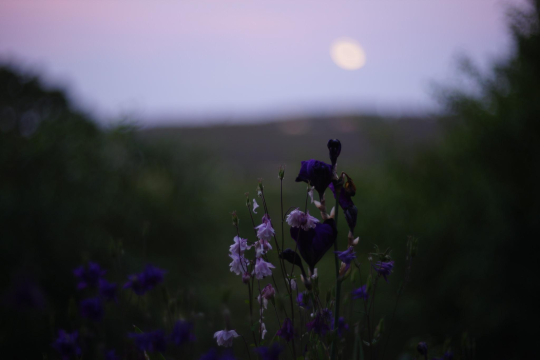
Moonlight Garden
A garden that blooms in the moonlight, a great place to perform night time rituals, meditations, or to just take a midnight stroll. A garden that is full of magick even after the sun sets.
Plants to add in your moonlight garden:
Moonflower: (Ipomoea alba) A nocturnal relative of the morning glory. Has fragrant flowers that open at dusk and close by dawn.
Evening Primrose: (Oenothera biennis) Has beautiful, scented flowers that bloom only at dusk.
Night Flox: (Zaluzianskya capensis) A sweetly fragranced flower that only unfurls its pinwheeled shaped flowers after dusk.
Four O’Clock: (Mirabilis jalapa) Its scented flowers bloom at around 4:00pm (hence its name) and do not close up until morning.
Queen of the Night: (Epiphyllum oxypetalum) A species of cactus whose flowers only open at night. Attracts moths and bats!!!
Night Blooming Jessamine: (Cestrum nocturnum) Strong, sweet scented star shaped flowers that only bloom at night. Attracts moths and bats!!! All parts are toxic, do not ingest!
Angel’s Trumpet: (Brugmansia) Produces a strong scent on warm summer evenings. All parts are toxic, do not ingest!
Evening Stock: (Matthiola longipetala) Produces lots of small blossoms that produce a perfume described as a mix of vanilla, rose, spice, and cloves only after the sun sets.
Ever-Flowering Gladiolus: (Gladiolus tristis) Release a strong almond fragrance after dusk.
Lilac: (Syringa vulgaris) Although has a perfume during the day, it is said to be a lot stronger after dark.
Flowering Tobacco: (Nicotiana) Open in the late afternoon and have a fragrance that smells of jasmine. All parts are toxic if ingested!
Summer Snapdragon: (Angelonia angustifolia) Preferably in white, to reflect the moonlight. Has a scent apple-scented foliage.
Silvermound: (Artemisia schmidtiana) Has thick foliage that will shimmer under the moonlight.
Jack Frost: (Brunnera macrophylla) Hdeart shaped leaves of silver and green, perfect to add more highlights of silver to your moon lit garden.
Any plant that blooms after dark or has white, lavender, pale pink, pale yellow on it is a perfect addition to your moonlight garden.
Things to add:
Stepping stones that have the phases of the moon.
Fairy lights
A place to sit
Candles
A small fountain to sing along with the insects and birds of the night
String charms and bells on tree branches for a soft jingling every time a gentle breeze passes.
Herb Garden
For witches who need a more practical garden for uses of healing, tea crafting, drying, and growing plants used in their practices.
Plants to add to your herb garden:
Anise: Helps to ward of the evil eye, find happiness, and stimulates psychic abilities.
Basil: Use for anything pertaining with love, exorcism, wealth, sympathy, and protection. Dispels confusion, fears & weakness. Drives off hostile spirits.
Bergamont: Corresponds with money and prosperity. Provides with protection from evil and illness, improves memory, stops interference, and promotes restful sleep.
Borage: Corresponds with courage and psychic powers.
Cat Nip: Is sacred to the Goddess Bast. Brings forth beauty, happiness, good luck, and good spirits.
Chamomile: Corresponds with love, healing, and sleep. Is known to reduce stress.
Chervil: Brings a sense of the higher self, placing you in touch with your divine, immortal spirit.
Coriander: Corresponds with love, health, immortality, and protection.
Dill: Corresponds with money, protection, luck and lust.
Lemon Balm: Corresponds with love, success, healing, and psychic/spiritual development.
Marjoram: Used to cleanse, purify, and to dispel negative energy.
Mint: Promotes energy, communication and vitality.
Oregano: Corresponds with joy, strength, vitality, and added energy
Parsley: Calms and protects the home.
Rosemary: Protects, cleanses, purifies, and aids memory.
Sage: Used for self purification and dealing with grief and loss.
Thyme: Attracts loyalty, affection, and the good opinion of others.
Things to add:
A place to dry herbs
A place to compost any herb scraps
Rocks
A place to leave offerings before you harvest
Bee Garden
Make yourself a sanctuary to watch bees frolic and thrive
Plants to add to your bee garden:
Bee balm
Lavender
Crocus
Snow Drop
Wildflowers/Any native species
Catmint
Borage
Anise hyssop
Heliotrope
Sunflower
Oregano
Yarrow
Coneflower
Black eyed susan
Asters
Goldenrod
Foxglove
Marigold
Pansies
Sweet peas
Nasturtiums
Things to add:
Bee houses
Bee waterers/bee baths
Bee feeders
A place for offerings to the bees
Some other ideas for your garden:
Hummingbird garden
Medicinal garden
A garden whose plants and decorations represent/correspond with your practice.
Butterfly Garden
Faerie Garden
The options are endless! I hope this gives you some ideas for this years garden.
When taking something from nature, such as herbs, it is nice to give something back. You can leave these lovely air-dry stones in places such as the forest as a way to say thank you. Leaving these in nature is also totally safe for the environment. You can also offer these to a god/goddess.
Recipe:
2 cups of baking soda
1 cup of corn starch
1 ½ cups cold water
Mix until smooth, then put it in a pan and stir until it boils. Keep stirring until it is the consistency of mashed potatoes.
Let it cool and take the clay out of the pan. It should feel really smooth and you will probably play with it alot before you are even going to make the stones 🙂
I added some herbs and flowers, such as rosemary, lavender, roses, carnations, thyme, cloves, cinnamon, some blue flowers of which I don’t know the name and some orange berries that I found near the park.
I just made a little ball, then made a hole in it and added some herbs.
Now you can decorate it! You can add anything and shape them in any way you want. As you can see I made some squares, hearts, blobs and even an easter egg 🙂 I’ve seen some people use glitter and I recommend you don’t add any glitter since that is actually bad for the environment. I tried using normal white sugar as an alternative, but i noticed that the stones got kind of wet, which I should’ve seen coming. Not sure what’s going to happen when it dries so I’ll keep you guys updated.
I’m so happy with these and I am definitely going to use these for Ostara ^^ Of course you can use this recipe to make anything you want, not just offering stones.








 The Carving Witch