summary/keywords: analysis of the verb harpazo (snatch away)
●
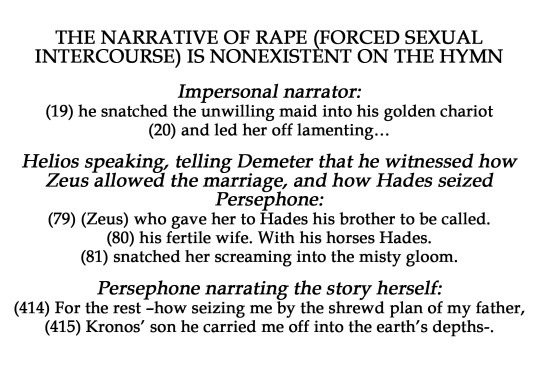
Hymn’s nonexistent rape narrative
●
the sorrow of Demeter and Persephone and its cause
●
Persephone’s wisdom
●
The attribution of honors (timai) ●
Hades and the pomegranate giving
● Pomegranate symbolism
●
Contradiction between narrator and Persephone’s voice
●
Hades and xenia (hospitality).
note: this analysis focuses mostly on the text of the Homeric Hymn to Demeter. We could expand the theme Hades and Persephone’s happy marriage based on cultus from multiple Ancient Greek cities which celebrated their marriage. And also, at Lokroi Epizephyrioi -south Italy- Persephone was the protectress of marriage. But these topics will be treated in a future post.
MISCONCEPTION 2: Hades raped, imprisoned and tricked Persephone.
The
HUGE problem with Hades and Persephone story, comes from the wrong translation or misunderstanding of the
verb ἁρπάζω / ἁρπάξας (line 19).Harpázō means snatch away, carry off. What Hades does is grab Persephone, get her on his chariot, and then both descend to the Underworld.
LATIN: The
verb ἁρπάζω / harpázō, in latin was rapiō which also means “carrying off”.
ENGLISH: The
English noun RAPE originated from
the latin (rapere), and it has the following meanings:
The act of seizing and carrying off by force / The abduction of a woman, especially for sexual purposes
►
TODAY, this is an
archaic meaning, so many people are not even aware of it.
The act of
forcing sexual intercourse upon another person without their consent or against their will.
When
anyone says “the story was called the Rape of Persephone” it actually means
“THE SEIZING of Persephone”. That is what the original Greek story tells, and
that was the story Ancient Greek and Romans repeated during centuries.
There is absolute NO narrative of rape in the Homeric Hymn to Demeter. What we are told repeatedly is that Persephone was seized. She was
taken against her will, yes. She screamed, yes. The action is described as
violent, yes. But there is NO rape narrative.


 The Carving Witch